Coming soon · Team Open Atlas
Consular Interviews in 2026: How to Avoid Preventable Visa Problems at the Window
Former consular officer Düden Freeman joins Open Atlas Summit 2026 to explain visa interview preparation, consistency, 221(g) and avoidable problems at the consular window.
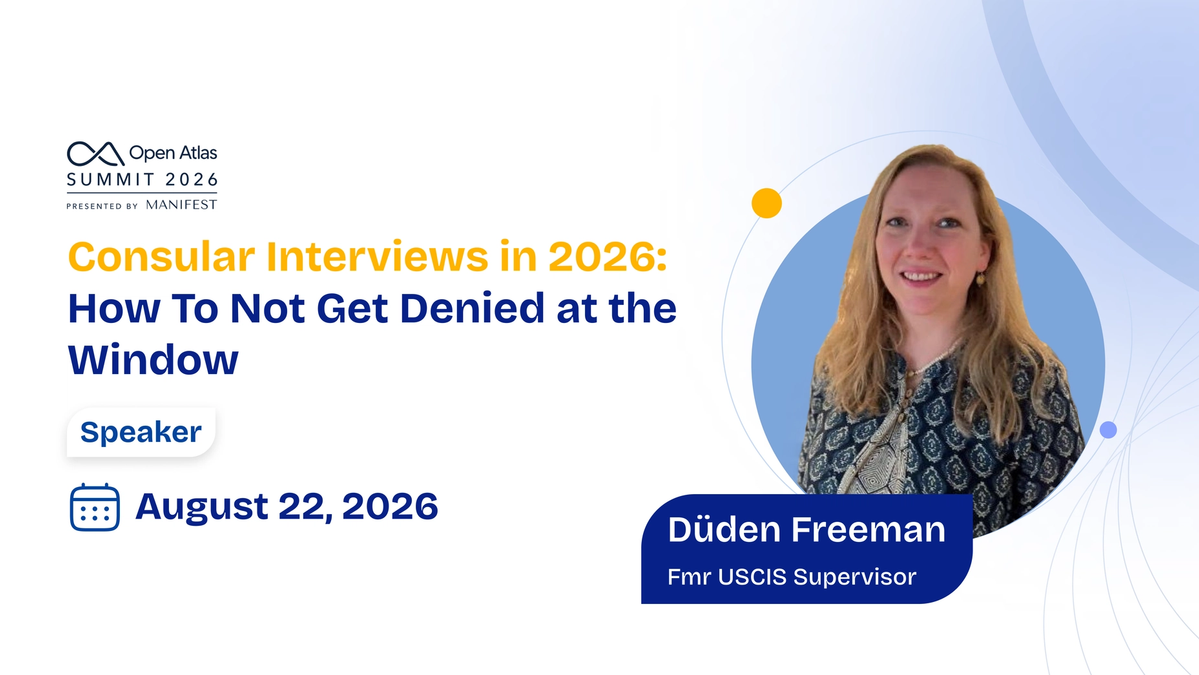
A consular interview can last only a few minutes, but it sits on top of months or years of immigration planning. At Open Atlas Summit 2026, former consular officer Düden Freeman will explain how officers approach interviews, what creates avoidable credibility problems and why applicants should prepare for clarity, not memorize scripts.
Meet the Speaker
Düden Freeman
Founder of Visas 101 and former U.S. consular officer, bringing firsthand experience from visa adjudication and consular interviewing.
What This Session Is About
A visa interview is not a performance contest. The officer is evaluating eligibility under the relevant law based on the application, petition where applicable, databases, documents and answers provided at the window. The safest preparation is truthful, consistent and specific.
What Will the Session Explore?
Know what is already in the record
Applicants should understand their DS-160, petition, employment details, travel history and previous immigration filings. Contradictions can create more concern than an imperfect answer.
Answer the question that was asked
Long rehearsed speeches can introduce unnecessary facts and make a straightforward case look confusing. Clear, direct answers help the officer understand the application.
Understand the purpose of the visa category
A student, worker, visitor or investor is being evaluated under different legal requirements. Preparation should focus on the actual category rather than generic interview tips.
A 221(g) outcome is not always a final denial
Some cases require additional documentation or administrative processing. Applicants should understand exactly what the consulate requests and follow the instructions provided.
Never solve anxiety with misrepresentation
False statements, altered documents or hiding material facts can create consequences far more serious than a delayed or refused visa.
Why This Session Matters
The session is valuable because it replaces folklore with an adjudicator’s perspective. Applicants cannot control every outcome, but they can control preparation, consistency and whether the officer receives a clear and truthful picture of the case.
Important: Consular decisions are case-specific and governed by current law and Department of State procedures. This article and session are educational and do not constitute legal advice.