Coming soon
EB-5, Gold Card or Wait It Out? Comparing Investor Immigration Paths in 2026
Open Atlas Summit 2026 compares EB-5, the Gold Card program and waiting on an existing immigration path, with legal, investment and immigrant perspectives.
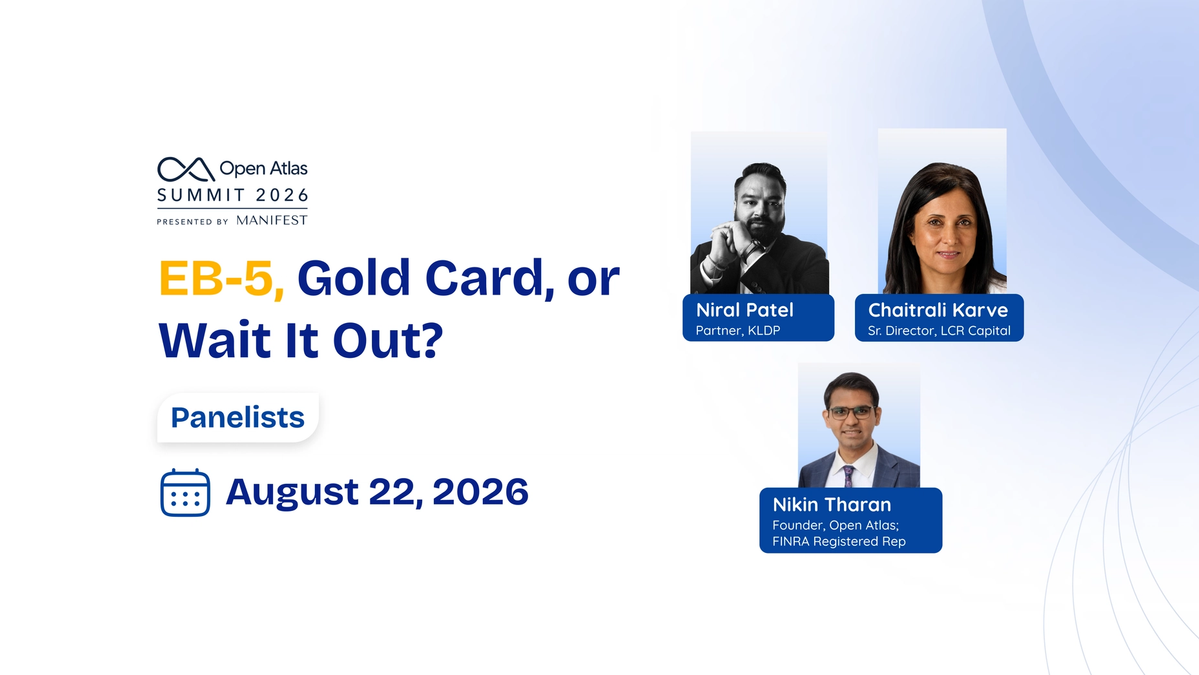
For immigrants facing long employment-based backlogs, investment immigration can look like a way to buy back time. But EB-5, the newer Gold Card program and simply waiting on an existing path involve different legal structures, costs and risks. This Open Atlas Summit 2026 panel will compare the choices without pretending there is one right answer.
Meet the Speakers
Niral Patel
Partner at KLD Partners (KLDP), with extensive EB-5 and business immigration experience.
Chaitrali Karve
Senior Director at LCR Capital Partners, bringing experience in investor immigration and EB-5-focused client strategy.
Nikin Tharan
Open Atlas founder and FINRA-registered representative, bringing both an immigrant and investment-market perspective to EB-5 decision-making.
What This Session Is About
Under current USCIS rules, EB-5 generally requires $1.05 million, or $800,000 in a targeted employment area or qualifying infrastructure project, plus job creation and other requirements. USCIS has also established Form I-140G for the Gold Card program; because that program is newer and evolving, applicants should verify current official requirements immediately before acting.
What Will the Session Explore?
EB-5 combines immigration law with an at-risk investment
The investor must satisfy immigration requirements while separately evaluating the financial quality of the investment. Approval of one dimension does not eliminate risk in the other.
Gold Card is a different structure
The Gold Card program was established through executive action and uses a distinct USCIS petition process. Its current rules, fees and implementation should be checked against official government sources because the program is still relatively new.
Waiting can be rational
An existing EB-2, EB-3 or other path may still be the best option when the person has stability, a manageable timeline and no reason to take additional financial or legal risk.
Time has an economic value
The analysis can include career mobility, spouse work, business flexibility, children, travel and the opportunity cost of remaining tied to an employer-based process.
Compare downside, not only upside
Large financial commitments, source-of-funds documentation, project risk, policy change and immigration timing should be evaluated before urgency becomes the decision-maker.
Why This Session Matters
This panel is valuable because it treats immigration as a strategic decision rather than a product comparison. The right answer depends on capital, risk tolerance, backlog position, family goals and the value a person places on time and flexibility.
Important: Investor immigration involves legal, financial, tax and securities considerations. Program rules can change. This article is educational and is not legal, tax, financial or investment advice.
Book your Summit tickets: https://luma.com/8c4qusfp