Coming soon · Team Open Atlas
When Does Immigration Litigation Make Sense? Delays, Denials and USCIS Accountability
John Pratt and Matthew Khalili join Open Atlas Summit 2026 to discuss when immigration litigation may make sense for USCIS delays, denials and accountability
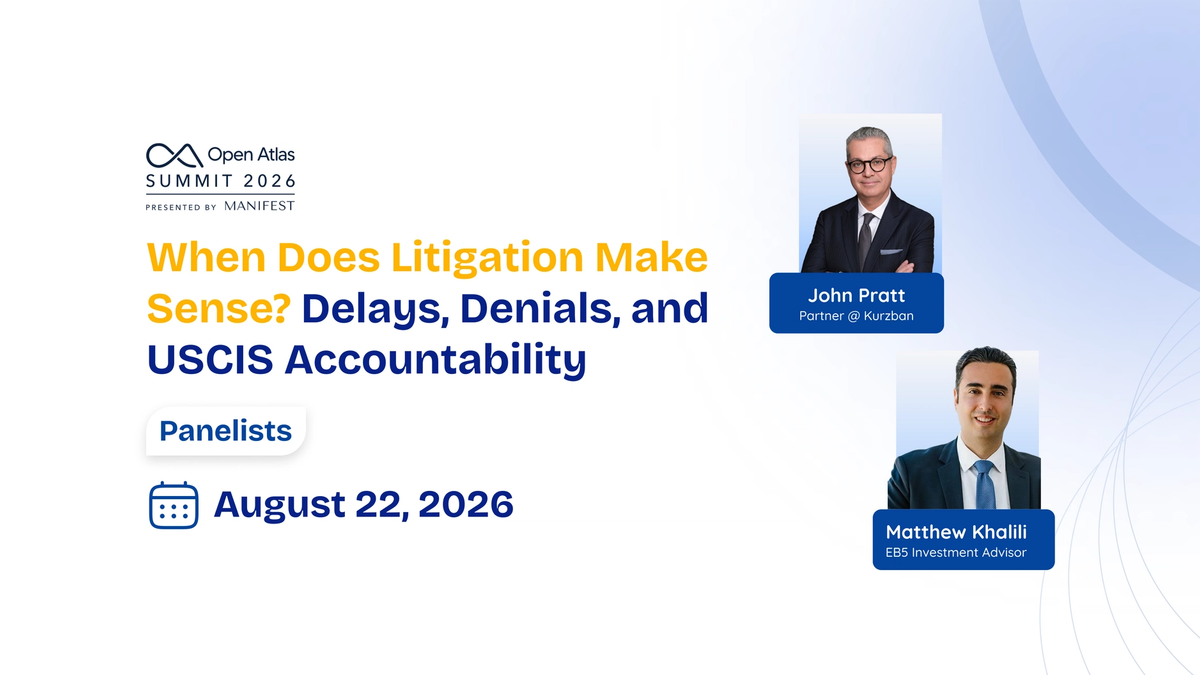
When an immigration case is delayed or denied, frustration can quickly turn into “Should I sue USCIS?” At Open Atlas Summit 2026, John Pratt and Matthew Khalili will examine when litigation may be a strategic tool, when it may not be, and what applicants should understand about cost, timing and downstream consequences.
Meet the Speakers
John Pratt
Partner at Kurzban Kurzban Tetzeli & Pratt, with extensive experience in complex immigration litigation and federal court matters.
Matthew Khalili
EB-5 investment professional, bringing the investor and project-side perspective on how immigration delays and disputes can affect capital and planning.
What This Session Is About
Immigration litigation is not a customer-service escalation button. Different claims—such as challenges to unreasonable delay or agency action—depend on jurisdiction, procedural posture, the administrative record and the relief a court can legally provide.
What Will the Session Explore?
Define the problem before choosing the remedy
A delayed case, denied petition, revoked approval and policy dispute are different legal problems. Litigation strategy begins with identifying what agency action—or inaction—is actually being challenged.
Mandamus and delay cases have limits
A lawsuit may seek to compel the government to act where legal standards are met, but that does not necessarily mean the court can order USCIS to approve the underlying benefit.
The administrative record matters
For denial challenges, the evidence, legal arguments and procedural history created before litigation can shape what a court reviews.
Litigation has business and investment consequences
In EB-5 and other long-duration matters, delays can affect capital, project timelines, family plans and investor expectations. Matthew’s perspective can connect legal process to financial reality.
Cost, timing and risk belong in the decision
A strong litigation strategy includes realistic expectations about fees, venue, government response, possible mootness and what happens if the case does not end as hoped.
Why This Session Matters
The session gives attendees a more disciplined framework than “sue or wait.” The right question is whether litigation advances a specific legal objective after other options, facts and risks have been evaluated with qualified counsel.
Important: Immigration litigation is highly fact-specific. This article and session are educational and do not constitute legal, financial or investment advice.
Book your Summit tickets: https://luma.com/8c4qusfp