Coming soon · Team Open Atlas
Immigration Policy Changes in 2026: What’s Real and What’s Noise?
AILA policy leader Sharvari Dalal-Dheini, former USCIS official April Padilla and Lighthouse HQ’s Robby Villanueva join Open Atlas Summit 2026 to separate real immigration policy changes from noise.
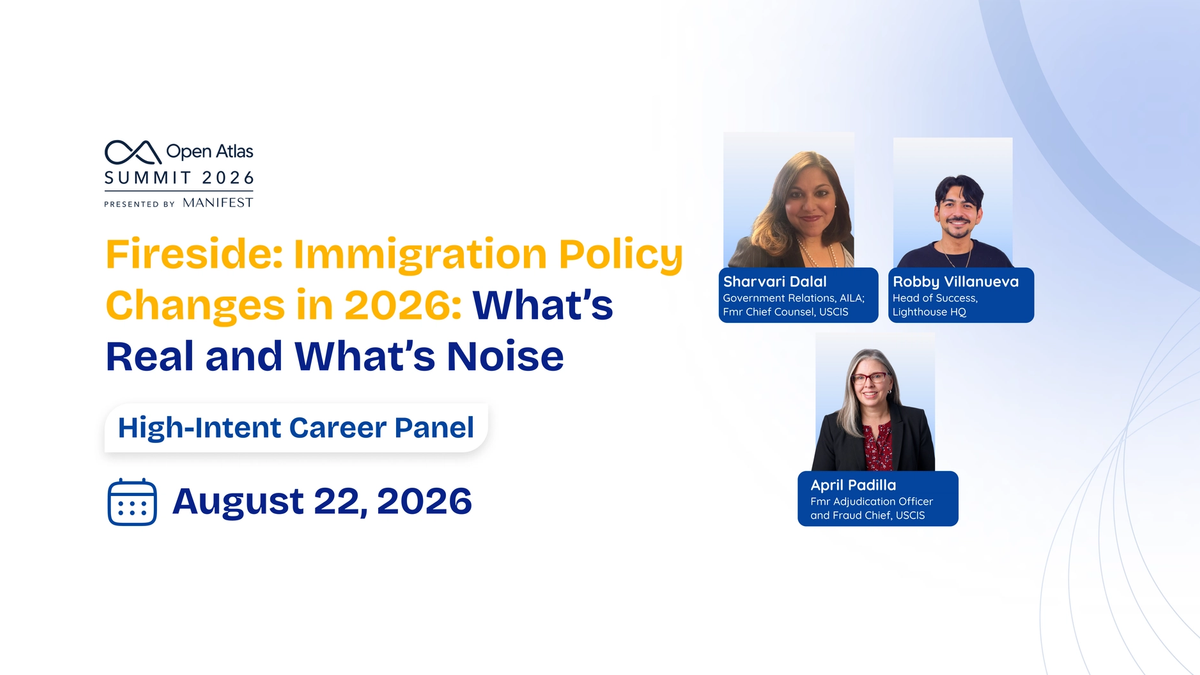
Immigration policy in 2026 moves through executive actions, agency guidance, litigation, regulations, operational changes and headlines that can blur those categories together. At Open Atlas Summit 2026, Sharvari “Shev” Dalal-Dheini, April Padilla and Robby Villanueva will help attendees separate legally operative change from proposals, commentary and social-media noise.
Meet the Speakers
Sharvari “Shev” Dalal-Dheini
Senior government-relations leader at the American Immigration Lawyers Association (AILA). Before AILA, she served for years in the USCIS Office of Chief Counsel, including as Special Counsel.
April Padilla
Former USCIS officer with more than 28 years of agency experience, including adjudications, policy work and leadership in fraud detection and security operations.
Robby Villanueva
Head of Legal Operations at Lighthouse HQ, bringing the immigration-operations and technology perspective from serving high-skilled talent and startups.
What This Session Is About
The most useful immigration skill in a volatile year is source discipline. A campaign statement, leaked draft, executive order, final rule, USCIS policy update and court injunction do not have the same legal effect. Understanding the difference can prevent unnecessary panic and bad decisions.
What Will the Session Explore?
Ask what kind of change it is
Statutes, regulations, executive actions, agency policy, form instructions and litigation each move through different processes and carry different legal weight.
Check the effective date and implementation status
A policy can be announced before it is operational. Forms, systems, training and litigation can affect when a change actually reaches applicants.
Watch how policy becomes adjudication
Sharvari’s policy background and April’s adjudication/fraud experience can help explain the gap between Washington announcements and the way officers apply rules in individual cases.
Security and fraud priorities can change case scrutiny
Even without a new visa category, shifts in vetting, fraud detection, evidence review or enforcement priorities can change the applicant experience.
Use primary sources before social commentary
USCIS, the Department of State, the Federal Register, court orders and official agency alerts should anchor decisions. Commentary is most useful after the primary text is understood.
Why This Session Matters
For immigrants, the goal is not to follow every headline. It is to know which developments can affect a real decision today, which may matter later and which are still speculation. This fireside offers a framework for staying informed without living in permanent immigration panic.
Important: Immigration policy can change quickly and litigation can alter implementation. This article is educational, not legal advice; verify current official guidance for any specific decision.
Book your Summit tickets: https://luma.com/8c4qusfp