Coming soon
O-1, NIW and EB-1A: Are You Actually Qualified?
Open Atlas Summit 2026 brings immigration founders and attorneys together to explain O-1, EB-2 NIW and EB-1A eligibility, evidence and petition strategy.
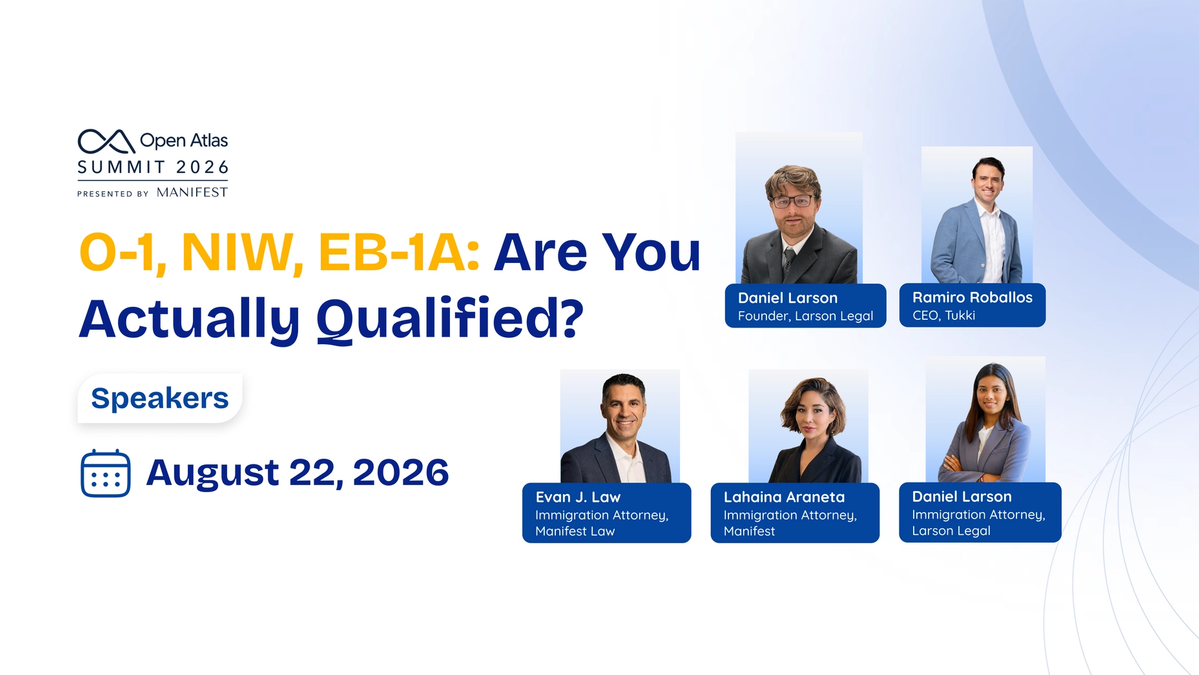
O-1, EB-2 National Interest Waiver and EB-1A are often grouped together online as “alternatives” for high-achieving immigrants. They are not interchangeable. This Open Atlas Summit 2026 panel will help attendees understand what each pathway is designed for, how evidence is evaluated and why checking boxes is not the same as having a strong case.
Meet the Speakers
Ramiro Roballos
Co-founder and CEO of Tukki, an immigration technology company focused on helping global talent navigate U.S. immigration.
Daniel Larson
Founder of Larson Legal and a business immigration attorney with more than a decade of experience, including self-sponsored NIW and EB-1A matters.
Deshna
Listed by the Summit as an immigration attorney with Larson Legal. Public profile verification is pending; confirm full name and current role before publication.
Evan J. Law
Senior immigration attorney at Manifest Law with more than 17 years of experience, including seven years as a USCIS Administrative Appeals Office appeals officer reviewing employment-based petitions.
Lahaina Araneta McBeth
Immigration attorney working with Manifest Law, bringing an additional practitioner perspective to employment-based immigration strategy.
What This Session Is About
The central question is not “Which visa sounds best?” It is “Which legal standard fits my facts, and what evidence proves it?” The panel combines immigration founders and attorneys with direct experience evaluating and preparing high-skill petitions.
What Will the Session Explore?
O-1, NIW and EB-1A solve different problems
O-1 is a nonimmigrant extraordinary-ability classification; EB-1A is an immigrant extraordinary-ability category; NIW sits within EB-2 and can waive the usual job-offer and labor-certification requirements when the legal standard is met.
Criteria are only the beginning
Meeting a threshold number of evidentiary criteria does not automatically make a petition strong. Adjudicators also evaluate the quality, relevance and overall weight of the evidence under the applicable standard.
Evidence needs context
Awards, publications, judging, critical roles, media, original contributions, compensation and commercial impact can be persuasive only when the record explains why they matter in the field.
Build the case before the deadline
Professionals who plan early can develop a stronger record through meaningful work, recognition and leadership rather than trying to manufacture evidence immediately before filing.
Choose strategy around your real career
A founder, researcher, creator and corporate executive may rely on very different evidence. The right immigration strategy should reflect the career that actually exists—not a generic online checklist.
Why This Session Matters
For high-skilled immigrants, understanding these categories earlier can improve career planning even before anyone files a petition. The goal of the session is clarity: know the differences, understand the evidence and recognize when a profile needs more development or professional legal analysis.
Important: Eligibility and immigration outcomes depend on individual facts and current law. This article and session are educational and do not constitute legal advice.
Book your Summit tickets: https://luma.com/8c4qusfp