Coming soon
USCIS Trends in 2026: Approval Rates, RFEs and What the Data Is Really Saying
Finn Reynolds of Lawfully joins Open Atlas Summit 2026 for a data-driven look at USCIS approval rates, RFE trends, processing times and employment-based immigration patterns.
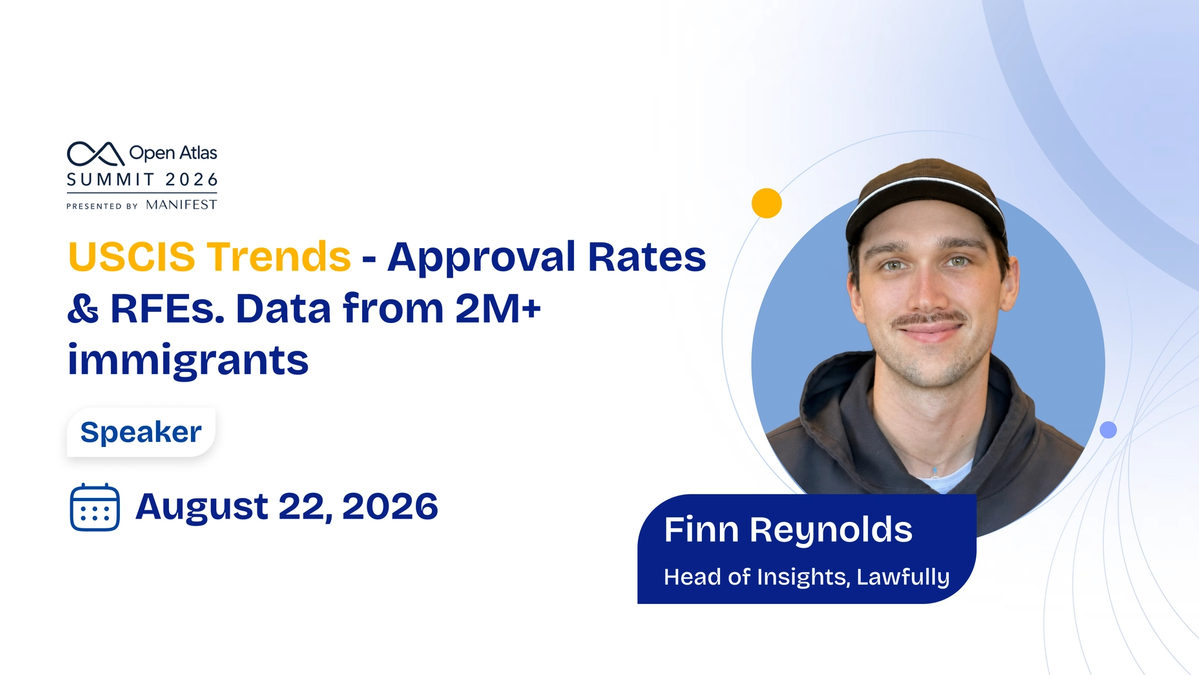
What is actually changing inside USCIS in 2026—and what is simply noise? At Open Atlas Summit 2026, Finn Reynolds will lead a data-first keynote on approval rates, Requests for Evidence (RFEs), processing patterns and employment-based immigration trends, drawing on large-scale case data associated with millions of immigration journeys.
Meet the Speaker
Finn Reynolds
Head of Insights & Strategy at Lawfully. His work focuses on turning large-scale immigration case data into useful intelligence on processing, approval and Request for Evidence patterns.
What This Session Is About
Immigration conversations often move faster than the underlying evidence. One difficult case can become a viral warning, while one approval can be mistaken for a new rule. This session is designed to separate broad patterns from anecdotes and help high-skilled immigrants understand what immigration data can and cannot tell them.
What Will the Session Explore?
Approval rates need context
An approval percentage is useful only when paired with the category, time period, filing population and policy environment. Finn can help attendees read trend lines without treating a national statistic as a prediction for an individual case.
What RFE trends can reveal
An RFE means USCIS is asking for additional evidence before deciding a case. Changes in RFE frequency or subject matter can signal where adjudicators are asking harder questions, but the meaning depends on the visa category and facts of the filing.
H-1B, O-1, EB-1A and NIW are different data stories
Employment-based categories are governed by different standards. The session can compare how scrutiny, processing and evidence patterns differ instead of collapsing every case into a single “USCIS approval rate.”
Processing time is not the same as approval risk
A case type can become slower without becoming harder to approve, or see faster movement while evidence expectations change. Looking at timing, RFEs and outcomes together creates a more useful picture.
How to use data without overreacting
The practical takeaway is to use data as a planning signal—not as a substitute for the law, case-specific evidence or qualified legal advice.
Why This Session Matters
For immigrants making decisions about jobs, travel, petitions and long-term plans, better information reduces panic. This keynote gives the Open Atlas community a framework for asking smarter questions: What is the trend? How large is the sample? Does it apply to my category? And what does the underlying rule actually require?
Important: Immigration statistics describe patterns and do not predict the outcome of an individual case. This session and article are educational and do not constitute legal advice.
Book your Summit tickets: https://luma.com/8c4qusfp