Coming soon · Team Open Atlas
What Happens Inside USCIS? A Former - Official View of Adjudication
Former USCIS leaders Ricky Murray and Michael Valverde join Open Atlas Summit 2026 to explain adjudication, RFEs, agency operations and what happens inside USCIS.
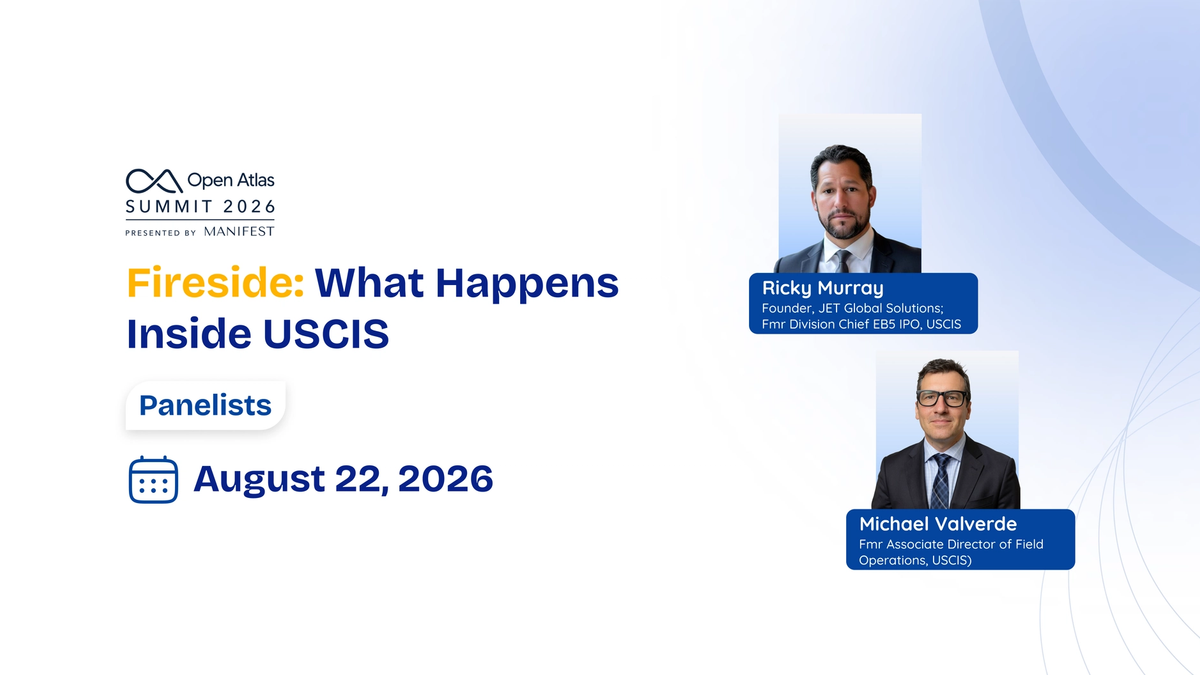
Most applicants experience USCIS as receipts, biometrics, RFEs, interviews and decisions. Open Atlas Summit 2026 will take attendees behind that interface. Former USCIS leaders Ricky Murray and Michael Valverde will discuss how cases move through an agency, how officers use policy and evidence, and why there is no secret formula for approval.
Meet the Speakers
Ricky Murray
Founder of JET Global Solutions and former senior USCIS official, including leadership experience connected to the Immigrant Investor Program Office.
Michael Valverde
Founder of True North Pathways and former senior USCIS Field Operations leader with decades of experience across immigration adjudication and agency operations.
What This Session Is About
USCIS is a large organization with different directorates, field offices, service centers and specialized programs. The way a case is processed depends on the benefit type, office, workload, security checks, policy and the evidence in the record.
What Will the Session Explore?
Adjudicators work from law, policy and the record
An officer is not supposed to decide a case based on whether they “like” the applicant. The filing has to establish eligibility under the legal standard with evidence that can be understood and verified.
RFEs are part of an evidence process
A Request for Evidence may identify a gap, inconsistency or issue USCIS believes needs more support. A strong response addresses the actual question rather than simply adding volume.
Agency structure affects the applicant experience
Field Operations, service centers and specialized offices have different responsibilities. Understanding those distinctions helps explain why two immigration processes can feel very different.
Fraud and security review are part of adjudication
Verification, background checks and fraud-detection functions can influence processing even when an applicant sees only the final notice.
Policy changes take time to become operations
New guidance must be translated into training, workflows and officer practice. That implementation layer can help explain why the system does not change uniformly overnight.
Why This Session Matters
The value of the fireside is perspective, not shortcuts. Understanding how adjudication works can help immigrants and attorneys present clearer records, interpret agency actions more rationally and avoid building strategies around rumors.
Important: Former-official perspectives are educational and do not represent current USCIS decisions or guarantee any immigration outcome. This article is not legal advice.
Book your Summit tickets: https://luma.com/8c4qusfp